

Emerging Artists Group Show
“HELLO”
October 11 – November 3, 2024
Ayaka Torimoto|鳥本采花
Jonathan Hadipranata|ジョナサン ハディプラナタ
Kazuho Ohya|大矢一穂
Keiko Aikawa|相川恵子
momoe|ももえ
Neinei|ネイネイ
Rikito Kurosaki|黒崎力斗
Ryosuke Misawa|三澤亮介
Samehoshi|さめほし
Shishidomia|穴戸小百合
MEDEL GALLERY SHU NISEKOでは、10月11日より11月3日まで、ギャラリーの柿落としの企画展”HELLO”を開催いたします。
ニセコに開業する弊廊の最初の企画として、皆様へのご挨拶・顔見世興行的な意味合いも込めて名付けた展示タイトル”HELLO”は、新進気鋭のアーティストによるポートレイト作品を中心に揃えた楽しいポップな展示会です。初めてニセコでお披露目するのに相応しい、フレッシュで楽しい作品を揃えました。
浮世絵から脈々と続く日本のサブカルチャー「漫画」や「イラスト」、村上隆が提唱する「スパーフラット」など日本独自の美術文脈を背景にした成長著しいエマージングアーティストばかりです。
ARTIST LIST
- Ayaka Torimoto|鳥本采花
- Jonathan Hadipranata|ジョナサン ハディプラナタ
- Kazuho Ohya|大矢一穂
- Keiko Aikawa|相川恵子
- momoe|ももえ
- Neinei|ネイネイ
- Rikito Kurosaki|黒崎力斗
- Ryosuke Misawa|三澤亮介
- Samehoshi|さめほし
- Shishidomia|穴戸小百合
ARTIST LIST
- Ayaka Torimoto|鳥本采花
- Jonathan Hadipranata|ジョナサン ハディプラナタ
- Kazuho Ohya|大矢一穂
- Keiko Aikawa|相川恵子
- momoe|ももえ
- Neinei|ネイネイ
- Rikito Kurosaki|黒崎力斗
- Ryosuke Misawa|三澤亮介
- Samehoshi|さめほし
- Shishidomia|穴戸小百合
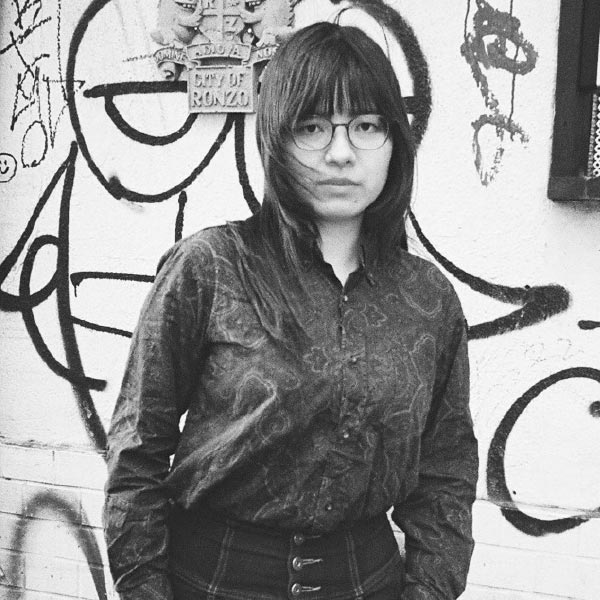
Ayaka Torimoto|鳥本采花
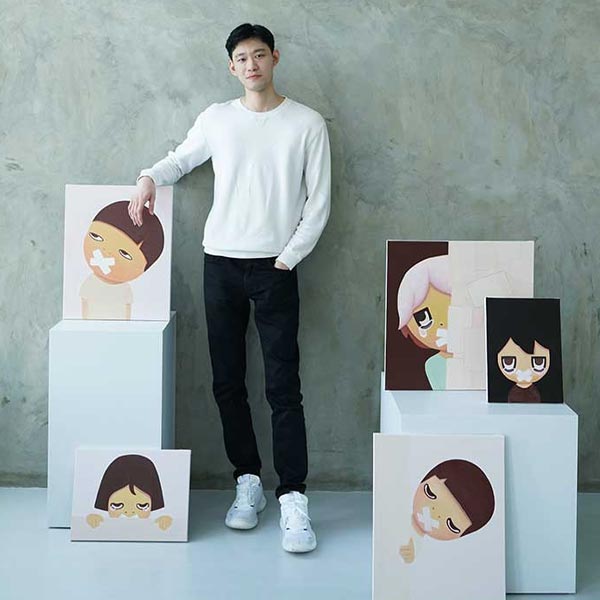
Jonathan Hadipranata|ジョナサン ハディプラナタ
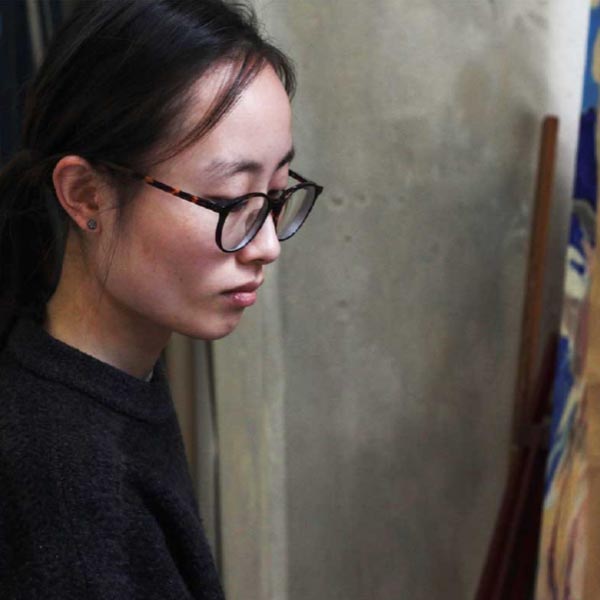
Kazuho Ohya|大矢一穂
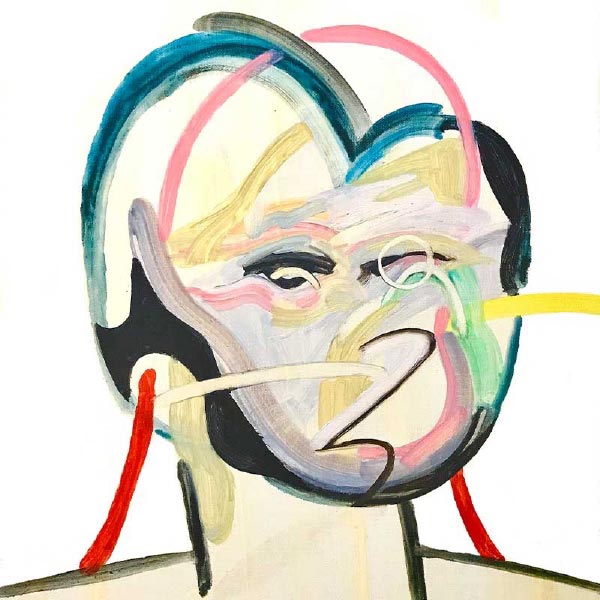
Keiko Aikawa|相川恵子
momoe|ももえ
neinei|ネイネイ

Rikito Kurosaki|黒崎力斗
Ryosuke Misawa|三澤亮介

Samehoshi|さめほし
Shishidomia|穴戸小百合
Ayaka Torimoto|鳥本采花
Birth.1994
Torimoto’s paintings are an unbalanced fusion of children’s characters with the classical thin oil painting technique typical of Boccielli. The fact that the children’s eyes are replaced by animal eyes and their eyelashes are painted like petals adds to the mystery of Torimoto’s work. She says she paints children because she is trying to digest the emotional ramifications of her own childhood. There is a self-portrait and an honest attitude to her own problems, but the children depicted have ambiguous facial expressions, and their race and gender are also vaguely indicated by the exclusion of the painting’s background. This lack of clarity allows the viewer to immerse themselves in the painting, which is fascinating. The innocent nature of the child, depicted with the grandeur of a classical religious tempera painting, brings us face to face with the essence of human nature.
Jonathan Hadipranata|ジョナサン ハディプラナタ
Birt.1995
What really drives my practice are emotions and storytelling. The concept of my paintingarises from my own experience and my view of society in which we are often unable to say what we want or express who we are, be it for the worse or for the better but almost always at the cost of our own happiness. Symbolized through taped mouth, the child figures to reflect our real innocence self, light or dark background that represents emptiness within.
One of the most prominent being Rembrandt, and the paintings during the “Dutch Golden Age”. When I was in art school, while most of my friends would focus on studying the impressionist or realist, I on the other hand, would analyze these paintings and try to produce the same result in my still life paintings. For Rembrandt in particular, I was in awe with the sense of drama and storytelling that he was able to capture in his paintings and drawings, his use of light and shadow, and colors in its theatrical way sparks my love to further studying color and light. I am also inspired by contemporary Japanese artists such as Yoshitomo Nara and Yayoi Kusama.
Yoshitomo Nara in particular really inspired me in the way he was able to show subtle emotions through his works, almost as if you can see the artist himself (his personality, influences, and life) in his works. Yayoi Kusama’s works really taught me what it meant to show your perception and understanding and at the same time, other people’s perception, and their understanding of it.
While I no longer use a strong light and shadow in my works, as well as using a more limited color palette, which in most of the paintings for the exhibition will be focused more on different shades and temperatures of white/light soft color to reflect the emptiness, I still want to capture the sense of drama that I had seen in Rembrandt’s works.
My hope is through my works, people can relate it, recalling a moment, a time, and a part of their life be it in a professional environment, daily life, or private life and that they are able to
embrace them, and understand themselves better. To be able to say what they want to say and to show their real personalities. To admit our own weakness, our own qualities and face society as one’s real existence.
Kazuho Ohya|大矢一穂
Birth.1997
Ohya’s paintings are based on three themes – Female, Oil Expression and Manga Expression – and depict a story in which fantasy intersects with the reality of human relationships and the state of social structures. The bodies depicted in her extended brushstrokes evoke sexual emancipation and express life itself. At the same time, the way the faces of the characters are drawn is a manga-like expression, heterogeneously mixed in the pictures. Ohya says that the manga expression she has been familiar with since her youth feels more realistic to her, but she tries to create a more sympathetic effect on the contemporary viewer, objectifying the story and linking it to contemporary events. The stories she paints seem to inspire an image of women who truly believe in their own strength in the face of a gender gap that still exists today. References to myths and classical stories of strong and enduring women also allude to the still unchanging social structures.
Keiko Aikawa|相川恵子
Birt,1989
Keiko Aikawa is adept at observe meaningless and irregular arrays in everyday life
as faces and is continuously looking for the presence of a face within a face.
She finds her face as her eye’s wanders and follows the shape quickly to avoid
losing its sight. Painting a face, she is constantly looking for another face, and
deliberate to find another face within. Through the process she questions in her mind,
“You know nothing about me”, and “I know nothing about you”.
Often in the process of her painting many faces, her mind responds, “I am not
capable to fully understand this living being”. As she calms down, relooking at the
completed artworks she then questions “What is this?”
What we see is only a part of something, and the other part is invisible. We may not
fully comprehend each other as the unseeable exists. Will I be able to uncover the
invisible face within a face with my keen eyes?
The face drawn by Keiko, who’s face this may be? Not one person will fully
understand.
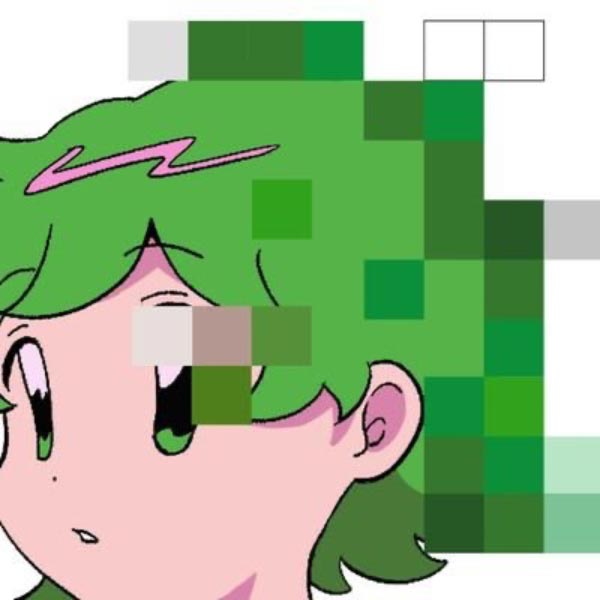
momoe|ももえ
Birth.2003
I was a child who loved cartoons and drew illustrations from an early age. I just liked to draw, but when I entered high school, I was praised for my drawing in the art class, and I decided to pursue a career in art at that time.
On the other hand, I have a strong interest in three-dimensional objects, and my associations with the various everyday objects that I see every day are growing, and I am on the verge of becoming a mass producer of funny goods. I capture these trivial thoughts from my daily life and incorporate them into my artwork.
I am currently enrolled in the design department at Tama Art university, where I am learning the importance of creating artworks that convey the message of the work while preserving my own particular style.
Therefore, the works are created to convey the interest I momentarily see in everyday materials.
Fluffy tangles of yarn, canvases stacked back to back that look as if someone might be looking through the cracks, ants crawling on the floor.
I am always trying to find a way to convey these little things of interest, these trivialities of interest, but with a certain confidence.
Characters that have always lived in me come to the material.
(text:mitsuki oboro)
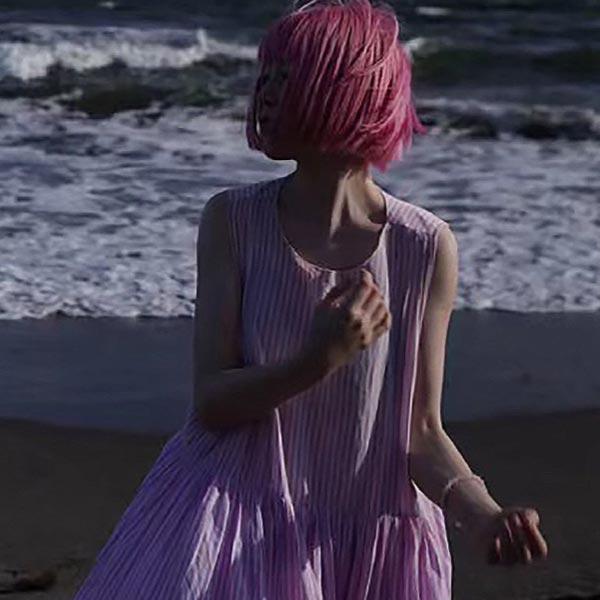
neinei|ネイネイ
Birth.
Tokyo Girl is my idealized, abstract figure of a girl. She lives and transforms daily not only on the street corners of Harajuku but all over the world.
To capture the ever-changing , I create from the perspective of “transboundary illustration expression.” By linking the “Hikime Kagihana” style of figure drawing with Ukiyo-e and manga, I cut out the truth of people living today as girlish symbols, providing a rich sense of life and arriving at the style of .
In this society, a girl possesses a worldview, consciousness, awareness, stubbornness, flexibility, and a certain bias. Sometimes, she transcends cuteness and functions as with venom, operating in a relentlessly cruel manner.
I want to continue depicting the who interprets the living conditions of her time.
Rikito Kurosaki|黒崎力斗
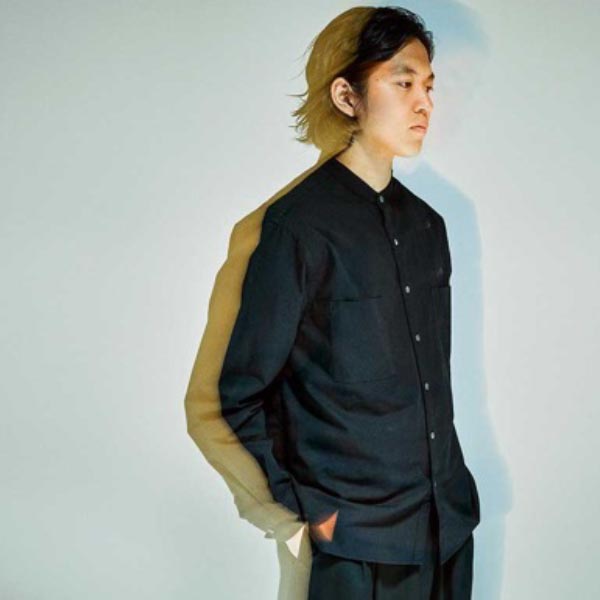
Ryosuke Misawa|三澤亮介
Birth.1992
Ryosuke Misawa explores and embraces various approaches to connect with others, the times, and the world through the medium of art.
He perceives art as a powerful means of communication, and his endeavors consistently involve the audience, aiming to establish a dynamic relationship and a realm of mutual observation through artistic expression of what is being seen or seeing.
Misawa wholeheartedly concentrates on the gravitational force generated by people and actively engages others in his work. Within his series of portraits, he delves into the intricate connection between “stars” and their audiences, which is shaped by the realms of social networking and entertainment, either constructed by us or in which we partake.
Furthermore, he examines the distinctive mode of communication historically observed in the “creation and following of extraordinary individuals.” In essence, it appears to be an exploration of the interplay between “stars” and their audience.
With a background in video and photography, Misawa condenses his multifaceted perspectives into two-dimensional portraits. His primary artistic technique involves utilizing preexisting images as a foundation for pixel decomposition, subsequently digitally painting on the canvas to bring forth a unique fusion of photography and painting. Leveraging the digital medium, he employs his distinctive approach, known as the “media paradox,” to convey his inner psychological landscape.
Samehoshi|さめほし
Birth.1997
Since her teenage years, she has been captivated by the allure of disfigured objects like cakes on the floor, melted ice cream, and broken plates. Through this fascination, she discovered the potential for something once beautiful and lovely to undergo a transformation yet retain its inherent beauty and charm.
Inspired by this concept, she embarked on expressing this possibility through the creation of “a girl who undergoes disintegration and formation.” The girl symbolizes the most cherished entity in her mind, an irreplaceable presence she holds dear. This impossibility of return became the catalyst for her artistic experimentation.
Deeply fearful of the natural process of “being forgotten or forgetting,” she chose to utilize fine pen lines in her artwork. This meticulous technique allowed her to swiftly capture and preserve her emotions and thoughts in a tangible form. Acrylic paints became an ideal medium for her artistic expression, harmonizing with her desired colors. To this day, she continues to paint “a girl who repeatedly collapses and forms,” employing acrylic colors and pen lines to encapsulate the essence of transitional moments.
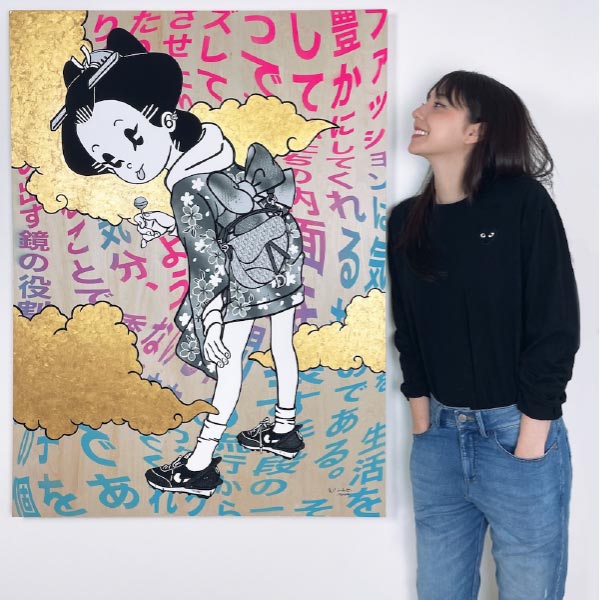
Shishidomia|穴戸小百合
I love the idea of creation and the beauty of pure imagination. I see my work as a window to a parallel world, a world where we can all belong, a world where the beauty of the Japanese Edo period clashes with the power of present symbols of Western culture and modernity. As a half- Japanese woman, my upbringing in Japan proved to be a challenging experience, I spent most of my life searching for a sense of belonging. It forced me to create my own reality, where we are accepted for who we are a reality where we can all belong.